Take these steps when redesigning your website to mitigate risk and avoid SEO disaster.

from Brian Milners SEO Feed http://tracking.feedpress.it/link/13962/8343546
via IFTTT
Take these steps when redesigning your website to mitigate risk and avoid SEO disaster.
Here are four things you need to know when creating your keyword strategy for SEO.

the best old-school spam linking tool there is today
Organic search makes up around one-third of traffic to company websites.
It accounts for more traffic than paid and social put together!
What does that tell us?
SEO is as relevant as ever.
If you work in marketing, write a blog, or have your own business, it is vital that you at least know the basics of SEO.
But here’s where you might hit a stumbling block.
Successful SEO requires extensive knowledge of how search engines work. It takes time and practice to get right.
Plus, it’s like a moving target. SEO best practices are ever-changing and developing. That’s because the search engine algorithms are updated all the time.
I’m talking 500 to 600 times a year.
Cheers Google.
And there may be 200+ ranking factors that Google looks at when analyzing your site (though it feels like 1,000 sometimes).
If you get the basics down, though, you’ll be off to a winning start. You can look at the more mind-boggling metrics later.
Without links, your search result is going to remain at the bottom of the pack.
The thing is, links have been one of Google’s key ranking factors for years. And they’re still hanging on at the top of the list.
They’re like that old friend who has stuck with you through thick-and-thin. They’re so reliable, you really can’t forget about them.
If it’s proof you want…
Not too long ago, Brian Dean and his team at Backlinko analyzed one million Google search results to see which factors correlate with first-page rankings.
Here’s what they found out about backlinks:
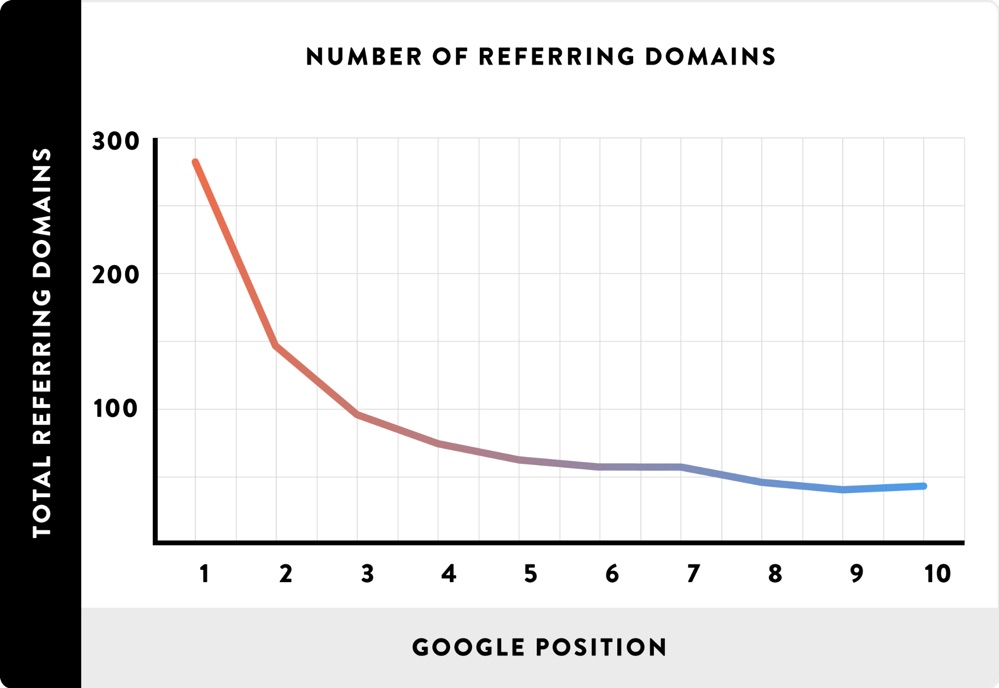
Evidently, they found that as the number of links a site has decreases so does their rank.
But, why are links so important?
Links from high-authority sites send a trust signal to Google. It’s like having somebody vouch for you. The more people that vouch for you, the more trustworthy you are.
Now the question is:
How do you go about getting these magical seals of trust that Google holds in such high esteem?
Links can be difficult to come by, especially if you aren’t well-versed in link building tactics.
At times you might feel like Gretchen Wieners in Mean Girls, waiting for a candy cane while Glen Coco gets four.

But there are proactive methods you can use to get backlinks. And you don’t need any special technical skills to use them either.
This is one of the most natural ways to get people to link back to your site. All you need to do is publish an interesting set of data from an original study carried out by your company.
If it’s something that makes others in your industry go ‘Wow!’ then they won’t be able to help themselves.
They’ll actually want to mention your study or results in their own blog posts and link to you as the source.
If you don’t have data or the resources to work with, then a case study will also attract links. A case study might focus on one fantastic result (and how you came by it).
Take a look at this nice example from Lean Labs:

Now, tell me you wouldn’t want to link to that case study in your own article about increasing leads.
This is a simple yet underrated technique for gaining links.
You’ve probably seen testimonials all over the place and may even have them on your own site. In many cases, you’ll also see an image, name, position and a link to their site with the testimonial.
This could be you!
Simply compile a list of companies you have worked with over the last year. Then send each of them an email, thanking them for their outstanding services.
Mention that you would like to offer a testimonial for their site if they’d like one.
There’s a strong chance they’ll accept. Because who wouldn’t want a glowing reference for their company?
Oh, and don’t forget to politely ask for a link if they don’t give you one automatically.
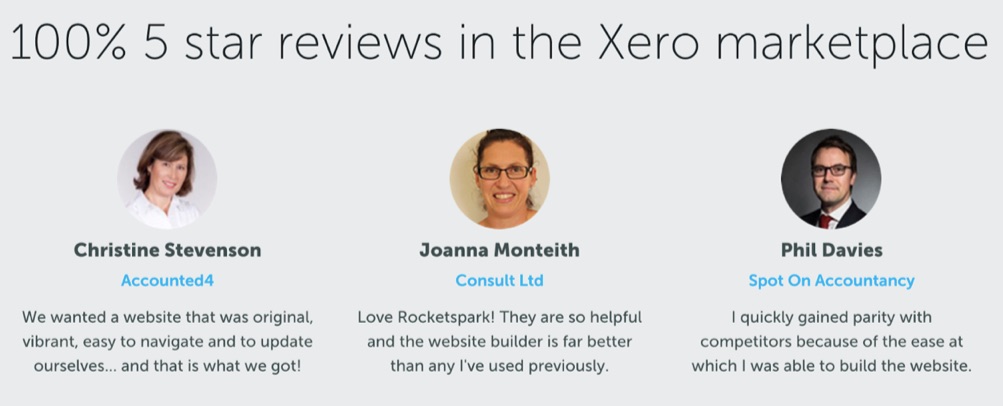
Follow these tips and… Links for you. You GO Glen Coco!
If you neglect content on your site, then you’re doing it wrong.
Content is another ranking factor that’s way up there at the top of the list. It’s just chillin’ with its pal backlinks and it’s not going anywhere.
The reason why content is so vital to SEO is common sense really…
Google wants you to produce fresh content consistently so it knows that you’re still active.
Content keeps people on your site. This is a signal to the search engines that you’re providing relevant and useful information.
And let’s just go ahead and state the obvious here… It’s where your keywords go!
Google’s updates obviously changed the way we use keywords in content.
What was it again? Something about keywords and stuffed Pandas?
But that doesn’t mean that sites don’t still rank for keywords. In fact, sites rank for a lot of keywords.
Ahrefs analyzed three million random search terms to see how many other keywords the top 20 pages also rank for.
Take a look:
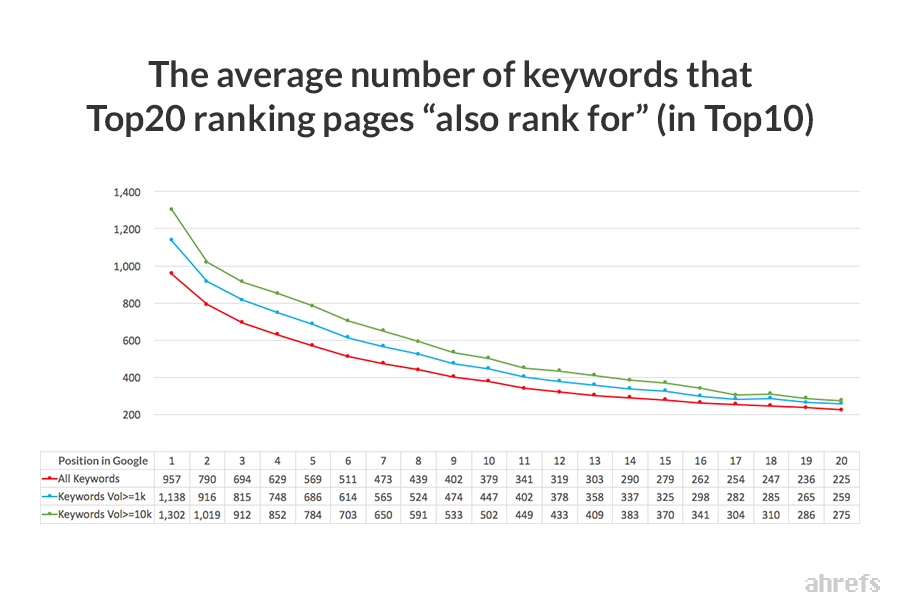
The number one page ranks for 1,000 other keywords, too.
You just can’t miss out on an opportunity like that.
So, here are some top tips for producing SEO-friendly content.
According to Brian Dean’s research, the average first-page result on Google is 1890 words. If that sounds like a lot of work…
That’s because it is.
Your content needs to be as long as possible to give it depth. Longer content provides more utility to your site’s visitors.
It also gives you space to target as many keywords as possible – whether intentionally or unintentionally.
Variety is the spice of content marketing. Different types of content or blog posts can serve different purposes.
A great idea is to produce your own video content.
If you’re in a blog-post rut, video tutorials are a great way to provide value for your audience and spice up your content.
For example, take this video on how to track your marketing campaigns:
Videos are highly shareable and linkable content, which makes them beneficial for traffic and SEO.
And you can still get the benefits of written blog posts (keywords etc.) Simply post the video on your blog with a transcription.
It’s your content, and you can do what you want.
That’s not the only reason to repurpose content though.
Sometimes, content needs repurposing to keep it fresh. In the SEO world, for instance, trends and developments move swiftly.
This means content on SEO topics made a few years ago don’t contain the most up-to-date advice.
Or you could repurpose it by turning it into a different medium like an infographic, e-book or slideshare.
Check out how Copyblogger adapted one of their strongest pieces of content to Slideshare:
Repurposing content lets you unbury old content and get more eyes on it.
Plus, Google likes fresh and up-to-date content.
The headline and meta description of your post or page is displayed in the search results. It’s probably the first thing a person sees.
It looks like this:
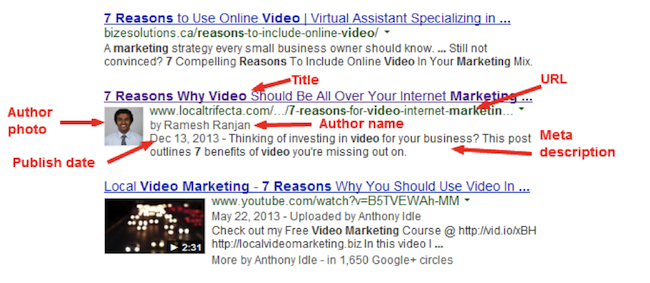
This is your first impression. So you want to make it a good one.
And while the meta description isn’t a direct ranking signal for search engines, it does carry some importance.
Because it helps people decide whether to click on your result or not.
The way people engage at this point is called the click-through rate (CTR). It compares the number of people who click on a result and how many people see it.
And CTR is an important ranking factor. So you can and should optimize your headline and meta description to improve the click-through rate.
Because if people aren’t clicking on your link, Google will notice and drop your ranking.
And your headline is a big factor in your CTR.
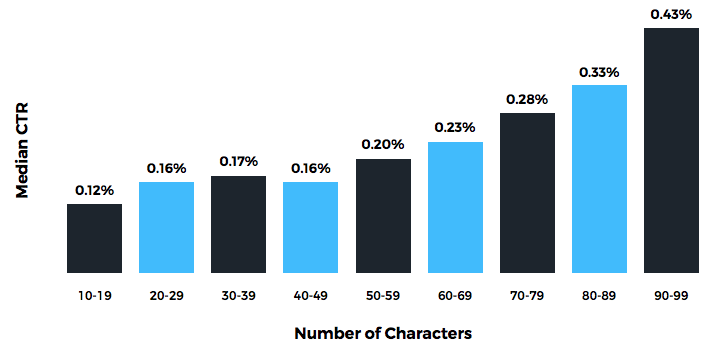
For instance, a study by Contently (see how we’re linking to them for their original research?) showed that longer titles (up to 90-99 characters) have a better click-through rate.
Make sure your headline contains your focus keyword.
If Google wants to know what your article is about, your headline is the answer.
But keep in mind:
A headline optimized for SEO isn’t necessarily going to be the most appealing.
So you need to find the sweet spot where your headline is good for the search engines and your audience. (People want to click on it and share it.)
Here are some tips to do just that.
Place them in a natural position, but as close to the beginning as possible. That way Google will receive your signal loud and clear.
You’ve probably seen a viral headline.
You know the Buzzfeed-type headlines, “This Avocado Stone Will Change Your Life” and “What Happens When You Balance an Avocado Stone on Your Forehead (The Results May Surprise You).”
Although, these types of headlines may seem a little intense. It turns out there’s a formula for producing a successful headline in this way.
Buzzsumo analyzed 100 million headlines to work out what makes a popular headline.

They found that headlines containing certain phrases got more engagement on Facebook.
And there was more. Emotional headlines also make for more engagement. Curiosity, too.
There are even phrases to end your headlines with so that they perform better.
So your best bet is to pop your keyword into a headline formula.
Take this LinkedIn post for example:
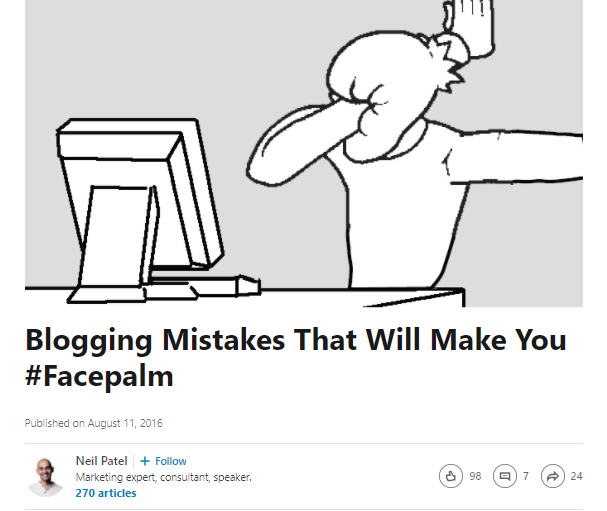
The keyword is ‘blogging mistakes,’ and it contains the number one popular phrase ‘will make you.’
So you may want to use a viral-style headline.
But be warned…
It’s important that your title and meta description genuinely represent the content you have created.
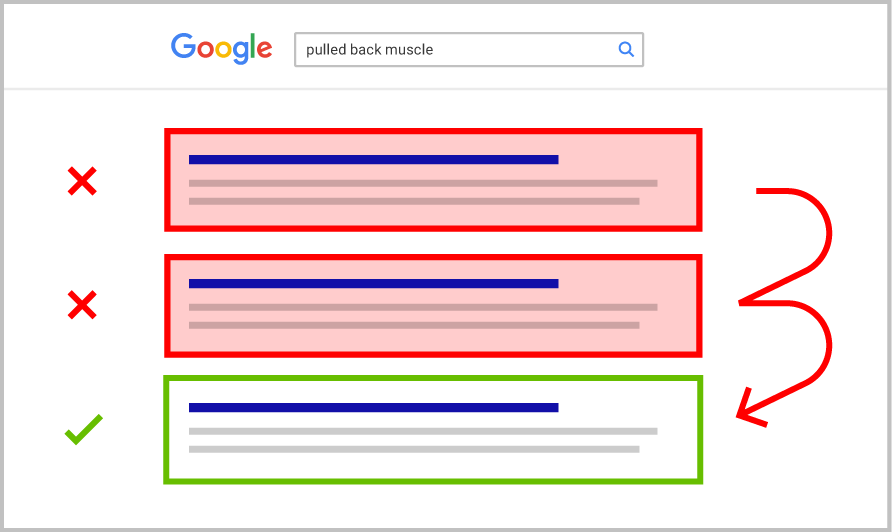
Otherwise, you’ll create a pogo-sticking effect.
That’s when somebody searches for something, clicks the first result, and it doesn’t contain the information they’re looking for they go back and click on the next result.
It isn’t what they’re looking for, so they go back and click on the next result and so on until they find what they’re actually looking for and stay on that page.
The page they stay on will go up in the rankings, and if your page is part of the pogo-sticking effect, it will go down.
Search engines value user experience (UX). Google collects data on the way users behave when they get to your site.
If the user experience of your site is not up to par, then it will negatively affect SEO.
Which makes sense because it’s Google’s job to supply the searcher with the best result they can.
And that’s all well and good if you have an outstanding piece of content that’s relevant to the search term and provides value to the visitor.
But if your page doesn’t load quickly enough, a user is going to smash up their laptop in frustration.
Or more likely they’ll just bounce.
As more people up and leave, it’s going to send a signal to Google that your user experience is not good enough.
People expect your site to load quicker than The Flash.
Maile Ohye, former Developer Programs Tech Lead at Google, explained:
“2 seconds is the threshold for e-commerce website acceptability. At Google, we aim for under a half second.”
Half a second!
But the time it takes for your site to load is just one of many metrics that Google analyzes to assess user experience. UX is such an intricate discipline with many aspects that it has its own field of experts.
So how do you, someone with little technical experience, especially in UX, improve your site for SEO?
User experience is simply working with the user in mind.
There are things people care about, and things they don’t.
The design of your website may be the Sistine Chapel of websites. But let’s be honest…
A user is coming to your site to find a product or information. They don’t care about your cutting-edge design.
They just want the whole experience to be easy.
I mean, we’re all basically sloths these days. We may be cute, but we’re lazy.
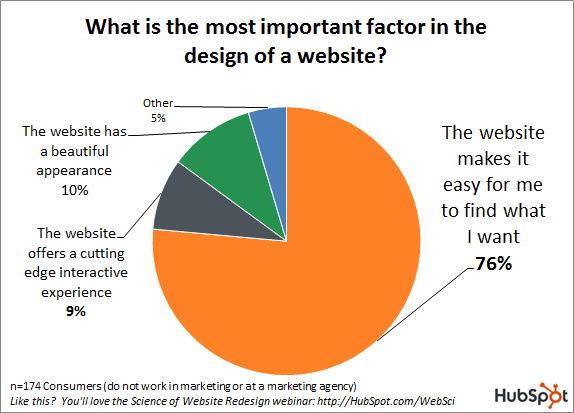
Hubspot proved this. Not that we’re actually sloths in human clothing, of course.
They found that what consumers value the most about web design is the level of ease:
So what can you do to give users an easy experience?
I’ve mentioned site speed and its impact. But how do you actually go about improving it?
Well, there are some methods that require tech skills and some that don’t.
One thing you can do easily is crop images so they’re the right size and compress them using a tool like Tiny JPG or ImageOptim (Mac only). This means they don’t take ages to load on your site.
You can also delete plugins that you don’t use because those might be slowing your site down.
Users don’t want to visit a site and be confronted with an image slider or every single one of your services.
It’s overwhelming.
You need a simple message and clear sections so users can find what they’re looking for.
Users shouldn’t need the Marauder’s Map to find secret passageways to different areas of your site.

Too many ads are going to put users off, too. Particularly on mobile.
According to The Coalition for Better Ads, ads should not take up more than 30 percent of the vertical space based on user experience.
Pop-ups are particularly terrible for mobile UX and should be avoided like the plague. Often they don’t resize correctly to fit mobile.
And it’s not as easy to get rid of them as it is on a desktop. You have to locate and jab the little x with your fat finger.
Mobile SEO is actually more important than ever.
Google will soon be using page speed as a mobile ranking factor, which they announced on their Webmaster Central Blog:
“The “Speed Update,” as we’re calling it, will only affect pages that deliver the slowest experience to users and will only affect a small percentage of queries. It applies the same standard to all pages, regardless of the technology used to build the page. The intent of the search query is still a very strong signal, so a slow page may still rank highly if it has great, relevant content.”
Currently, Google’s algorithms analyze the desktop version of your site first.
But mobile-first indexing is here.
And you need to get ready.
Most people search on mobile these days and the change is coming.
Google has stated in the past that over 50 percent of searches come from mobile.
Hitwise estimates the figure to be around 58 percent, based on analysis of hundreds of millions of search queries in key categories across PCs, tablets, and smartphones.
Here’s what they found:

If your niche is in one of the higher percentage categories, you need to pay extra attention to mobile SEO.
So how do you optimize for mobile?
The simplest way is to check if your site is mobile-friendly with Google’s mobile-friendly test.
All you need to do is copy and paste your URL. It takes seconds to come up with the results.
It will tell you if your site is mobile-friendly or not on a screen like this:
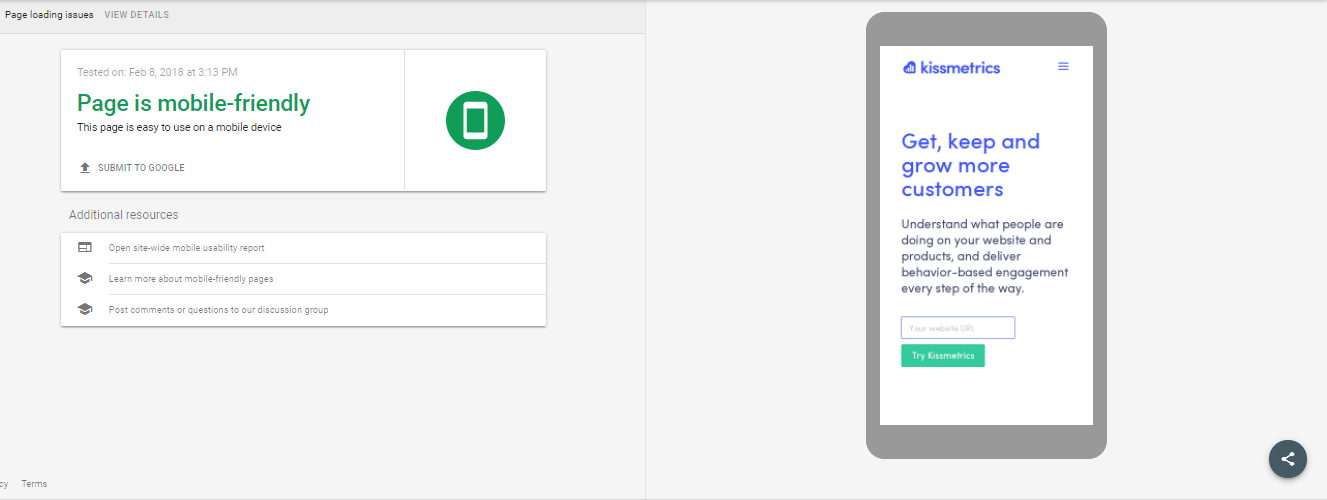
If your site fails the test, Google will tell you where the errors are on your mobile site. For example, it might say ‘Text is too small to read’ or ‘Content is wider than screen.’
To fix those errors, you’ll need to create a responsive website. This is Google’s preferred design.
So basically, you’d be silly if you didn’t choose their preferred design option.
Here are some additional tips for mobile SEO.
Think about how you search on your smartphone.
I bet a lot of the time, you’re out and about and need to find a local shop or restaurant, for instance.
You’re not alone. 89% of people search for a local business on their phone once a week and 58 percent do it daily.
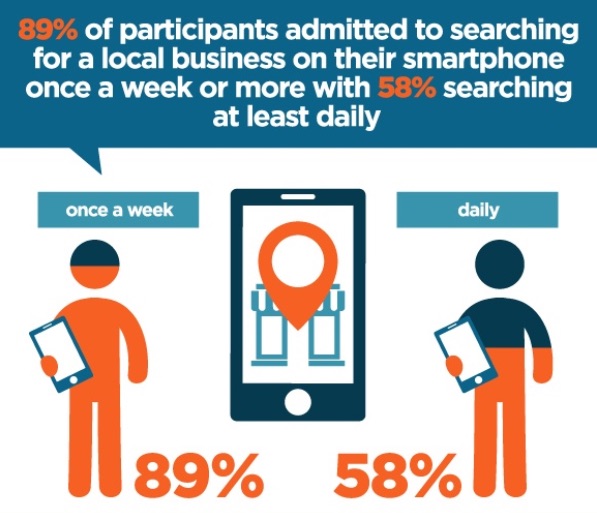
That means it’s time to improve your local SEO to get the best results on mobile.
Lots of people use voice search on their mobile now.
In fact, 20% of mobile queries are voice search.
The importance of voice search is growing.
So you need to start thinking about the kind of natural language people will use when performing a voice search. And add your discoveries to your keyword list.
Because even though you might type “weather Seattle,” you’re not going to use that with Siri or Alexa.
You’re probably just going to ask, “Hey, what’s the weather like in Seattle?”
Your content will need to reflect that.
Don’t play hide-and-seek or display content differently on the mobile version of your site.
In other words, there should be no content hidden behind expandable sections, menus, or buttons.
If Google is going to look at mobile first in the near future, then it needs to be able to see all of your content on mobile.
Yes, SEO is like trying to hit a moving target.
But putting the skills behind these basics into practice will ensure you make several hits.
A key takeaway from this article is that there are proactive methods you can use to improve SEO, even if you have no technical skills.
Go after the important metrics such as links or content with simple methods and tricks.
Think of your audience as well as the search engines when working on your site.
And don’t forget to get ahead of the trends by optimizing for mobile.
Anyone can do these things.
What are your go-to SEO basics?
About the Author: Neil Patel is the cofounder of Neil Patel Digital.
Here's what you need to know about doing SEO for ICO and cryptocurrency-related websites.

Content is king.
And content marketing in 2018 remains a brilliant and cost-effective method for engaging with leads and customers, spreading brand awareness, and getting around the increasing use of ad-blockers.
Whether it’s an email newsletter, social media post, or blog on your own or someone else’s website, people want to see your stuff. They accept it. Approve it. Whitelist it. Because it’s the user him or herself clicking on it, there are no concerns of spam complaints, or annoying the recipient, or ending up in the junk folder.
It’s popular, powerful, and for all intents and purposes, perfect. If you’re online in any professional capacity, you’re already using it.
Google “content marketing” and you’ll uncover millions (78,200,000 when I did it just now) of results, everything from definitions to how-to guides to case studies. You can quickly and easily pick up the how, why, when, what, and where of content marketing. Every online marketing personality and business has their own advanced guide or step-by-step guide, allowing anyone to grasp, experiment, and eventually master the subtle art of content marketing.
“Content Marketing is all the Marketing that’s left.” ~ Seth Godin
Strikingly, the only thing you won’t see much of in those millions upon millions of links is how to know when your content marketing isn’t working.
Because there’s a lot more to successful content marketing than just traffic and clicks, and a hell of a lot more than just likes, shares, and retweets. Those are simply vanity metrics that don’t tell you anything of importance by themselves…although it sure does feel nice to see people are loving your stuff.
Now, vanity metrics can be used to find actionable insight, but that’s the subject of another post on another day. Suffice to say, if you’re gauging the success of your content campaigns on likes and shares alone, you’re doing it wrong and wasting your time and energy.
Instead of focusing on the vanity metric, use it to inform your marketing decisions. Dig deeper. Find the corresponding actionable metric.

Content marketing is an active endeavor, and most of the hard work starts after you hit publish. It’s not about reaching people; it’s about reaching the right people.
How do you know when you’re not doing that?
Look for these five red flags before and during the push.
But before we get to that, let’s review some basics.
If you remember only one thing about content marketing, make it this: write your strategy down. Be explicit, detailed, and clear about goals (use SMART goals and stretch goals if applicable), tactics, channels, and how you’re going to measure success.
What will “success” look like? How will you measure return-on-investment? Make sure you and everyone on your team knows and understands.
How often will your marketing team meet? The most successful meet regularly to evaluate, tweak, and manage as necessary. Your content marketing should not be set-it-and-forget-it.
Target your ideal customers. Segment your audience. A/B test. Monitor your efforts. Create evergreen content. Measure the return-on-investment to maximize your budget. Look at your competitors and industry to see what’s working, what’s not, and what others are and are not doing.

In their 2018 annual report on content marketing, CMI discovered that only 38% of B2C businesses have a documented strategy. That’s appallingly low.
Document your strategy. Do that, and you’re ahead of 62% of the competition.
Diversify your tactics and channels. The same report found that B2C marketers:

The tricks and tips and hacks for better content marketing are many. Read some. Read many.
“We need to stop interrupting what people are interested in and be what people are interested in.” ~ Craig Davis, former Chief Creative Officer at J. Walter Thompson
And that brings us back full-circle. Knowing when your content marketing isn’t working is as important as knowing when it is…if not more so.
How can you tell if you’re on the wrong track and heading in the wrong direction?
Watch for (and respond!) to these five signposts along the way.
Consider this hypothetical scenario: you launch an aggressive content campaign, complete with blog and social media posts, videos, and infographics, to promote your new SaaS product launch.
Everything has a rock-solid call-to-action inviting people to a free 7-day trial. They click the CTA button, are transported to a well-crafted landing page, and sign up.
That’s an undeniable content marketing win, right?
Wrong. It could be a win…depending on who is signing up. Numbers alone don’t answer that question. Even if you’re looking at an insane 60% conversion rate, it’s meaningless if those signing up are the wrong people.
So who are the “wrong” people? Anyone that’s not within your target market. They may be interested in your content for a wide variety of reasons – research, curiosity, education – but they’re not necessarily interested in your product or service.
Now, far be it for me to suggest that you shouldn’t ever target outside your market. I’m not, and you should. Sometimes your best customers down the road are the ones you’re not even considering at the moment.
A portion of signups outside your target audience is not only nothing to worry about, but a positive and worthwhile goal.
That said, if 50%, 60%, or 70%+ of your leads are falling outside of those you were targeting – wrong geographic location, industry, background, profession, income level, interests, or whatever – something’s wrong. If the majority of those signing up for your email newsletters, gated content, or free trials are nowhere near your ideal fit, your content marketing isn’t working.
Before you write a single line of blog post or send a single tweet, you need to be crystal-clear on your ideal customer. Get to know him or her. You’ve no doubt heard about the importance of buyer or customer personas. Build and use them to guide your content efforts. Do that, and the likelihood of the “wrong” people coming to your content goes down exponentially.

Why? Because a detailed persona allows you to reverse engineer your content specifically for them: their wants, needs, pain points, values, and more. That’s more than half the battle.
If you’re just starting out, this is a bit more difficult, but not impossible. If you have existing customers and sales data to work with, though, you can zero in on the best of the best. According to Duct Tape Marketing:
That’s your ideal, most profitable customer. Create content for him or her. Share it on the platforms he or she uses and spends the most time on.
Social platforms typically have built-in capabilities, such as Twitter Analytics audience insights dashboard.

If you’re targeting English-speaking men over the age of 50, and your Analytics report shows most of your visitors are females under the age of 25 and from Italy, all those conversions – sign-ups, downloads, or otherwise – probably aren’t going to amount to much with your bottom line.
The sooner you know that, the sooner you can fix it. If the wrong people are signing up or downloading your lead magnets, you have to change direction. And fast.
Know exactly who you’re targeting, and give them exactly what they want and where they want it. Then monitor to make sure it’s drawing them in.
Backlinks are still important for your search engine optimization. In fact, many would argue that they’re the key to your overall SEO success. Quality backlinks from respected sites is a surefire indicator to Google and the rest of the search engine overlords that your content is valuable, useful, and worth a read. It’s a vote of confidence.
And that can translate into a big jump on the SERPs. The closer you are to that coveted top spot, the better the chance someone will click on your link. Increased traffic means increased leads, which means increased revenue. Google is happy, the users are happy, and you’re happy.
Backlinks and SEO go hand-in-hand. But backlinks can also tell you if there’s something amiss with your content marketing.
Imagine if your backlink profile – a report on which external sites are linking to your stuff – is populated with websites you wouldn’t expect your target market to visit. Good? Bad?
It depends on your criteria. If those sites are quality sites, those backlinks are still going to give you a healthy SEO boost. That’s good.
However, it may be evidence that your content is not resonating with your ideal customers. And that’s very, very bad. Your content, after all, is how you introduce yourself to them, educated them on your products and services, and persuade them to open their wallets. If it’s missing that mark, you’re failing at the marketing game. It’s the difference between leaving a flyer on hundreds of windshields in a mall parking lot, and hand-delivering to prospects you know would benefit from what you have to offer.
Luckily, generating a backlink profile and conducting a link audit is fast and easy, and there are many tools to assist with it.
To get a basic list, log in to Google Search Console. Click “Search Traffic” on the left-hand menu, and then select “Links to Your Site”. You’ll get a quick n’ dirty report with the total number of links, and the sites who link the most.

Now, you can determine if the sites linking back to your content are within your “demographic”. Some you might recognize by name, others you may have to visit and evaluate.
For a more detailed analysis, you can try a dedicated backlink tool. Some of the best include:
If your target is recent university graduates, and you’re receiving backlinks from retirement agencies, there’s a mismatch. You’re not producing the right content to connect with those just entering the workforce.
If you’ve done your homework, you should have detailed customer personas. You should know not only who they are, but also what they need, and where they are. Too many people outside those parameters linking to your content is not necessarily a bad thing, but it’s not going to generate massive sales and revenue.
The sites linking to you are an indicator of who your content is reaching. If you’re targeting professionals, but most of your links are coming from gossip sites, stop. If you’re after grandparents, but Millennial Now is your biggest external source, halt.
Check your link profile. Ensure most of them are coming from sites your target audience would frequent to increase your exposure with them.
If not, re-evaluate. Switch tracks. Create more of what they want, need, and desire. Align your content with your customer.
Yes, I did tell you at the beginning of this post that shares and likes are a vanity metric. That’s still true. But do you know what else is true?
Great content gets shared.
If people are reading your content but not sharing it, then you’re not producing quality content and your marketing is failing. Period.
This is especially true with influencers in your niche. If you create enough fantastic content, eventually some influencers in your market will share that content. If they aren’t, that’s trouble.
Think about your own online behavior. When you read or encounter a great blog post, infographic, or video, you share it with your own fans, followers, friends, and family. It’s almost automatic. Every platform has the ability built-in, and third-party tools like Hootsuite and sharing plugins make it effortless and convenient.
We read or watch it, we instinctively share it. You want your content to be shared. You need your content to be shared.
Every time you create something, you want it to go viral. That kind of reach and exposure is the dream. While it may not happen for you, consistent social sharing increases your exposure exponentially. One retweet puts your content in front of a whole new set of eyes. It gets people talking about you and your brand. And the cycle repeats if only one person from that new group shares it again, and so on.
First, you need to track how many shares you’re getting with your existing content.
Tools like Hootsuite can monitor your mentions across social media, Google Alerts can notify you when your tracked keywords and phrases are used, Likealyzer analyzes your Facebook Page, Snaplytics provides data on both Snapchat and Instagram Stories, BuzzSumo shows you how content on your site is doing on social media, Google Analytics can report on how much traffic to your site is coming from social channels (under Acquisition > Social > Overview), SharesCount displays social shares based on individual URLs, and all-in-one management platforms like Sprout Social can monitor most of the major platforms from one dashboard.

If you have no shares, you have some serious work to do. If you have some shares, more is always better. If you’re happy with the shares you’re seeing, you’re selling yourself and your content short.
“It’s not the best content that wins. It’s the best promoted content that wins.” ~Andy Crestodina
More shares, more exposure. More exposure, more leads. More leads, more conversions. So, do everything you can to increase the amount of social sharing you’re already seeing:

Increasing your social shares should be part of your content marketing strategy regardless of how many you’re currently seeing. Step 1: monitor your shares. Step 2: increase your shares.
None, few, or lots, more are better.
This one is reactive. You won’t know until you start generating some quality leads. It requires asking or surveying them about where and how they heard about you, your brand, and your products.
It might be a simple question in your email series or while talking to them on the phone, or a follow-up online survey, or a fill-in field on an opt-in form. “How did you hear about us?” is profitable and relevant data to collect.
The answers should be varied if you’ve diversified your marketing efforts. Some might say it was a referral from a friend, another might mention an online review or recommendation, while others may have clicked a PPC ad, or read a newspaper feature, or googled your targeted keyword.
But some of them will hopefully talk about your content. In a perfect world, they’ll bring it up without any solicitation from you, choosing to mention how much they loved your blog post on X, or how helpful they found your infographic on Y. That’s when you know your content marketing is crushing it.
Great content with great promotion should elicit great (and unsolicited) feedback.
“What you do after you create your content is what truly counts.” ~Gary Vaynerchuk
If none of your leads are talking about your content, that’s a major red flag. If none of them mention “content” when you ask, that’s a neon signpost. Do not pass Go. Do not collect $200.
Ask. And if the answer is anything and everything but content, you know you need to head back to the drawing board. Don’t stop whatever is working, of course, but tidy up your content efforts at the same time. It’s just too lucrative a tactic to allow it to fail so miserably.
Ask yourself: what do my ideal customers most need? What do they struggle with? How can I better/simplify/improve their lives?
Answer those questions and more with the content you create, and tongues will be wagging.
Lead generation is a major part of any business plan. A steady stream of leads going in at the top of your sales funnel means a steady – albeit smaller – stream of customers and advocates exiting at the bottom.
But all leads are not created equal.
Picture this: the leads that are reaching out to you are asking about things you can’t or don’t do. Once or twice is an anomaly. But if it happens on a regular basis then your content is likely at fault.
Leads asking for something other than what you do is often a symptom of creating content that is not directly tied to the business.
If you’re in the analytics business, you should write about analytics. If you produce quality content on SEO as an extension of that, don’t be surprised if people contact you asking for SEO advice and solutions.
If leads are asking about things you can’t, don’t, or won’t do, you aren’t creating the right content for your business. Content marketing is supposed to introduce you as an expert and authority in your field. It’s supposed to initiate a discussion between you and those in need of what you have or do.
In your content efforts, stick to only those topics and sub-topics that are directly related to your product or service. Write only about those subjects. Talk, share, comment, and engage only in those areas.
Everything else is just noise.
“Traditional marketing talks at people. Content marketing talks with them.” ~Doug Kessler
No traffic. No clicks. No leads. No ROI. Those are a few common reasons your content marketing isn’t working for you. Those are easy to recognize and relatively easy to correct. Jay Baer suggests four categories to fix a broken campaign:
But content marketing can fail in many less obvious ways. It’s your job to watch, monitor, and manage those silent killers.
The five discussed here are far from exhaustive. The list of potential content assassins is long. You’ve got to stay vigilant.
It is possible to get and stay on the right track heading in the right direction.
Over to you. What other ways have you found your content marketing falling short? What hiccups have you stumbled upon in your marketing? What red flags are you always on the look for?
About the Author: Neil Patel is the cofounder of Neil Patel Digital.
Consistently creating optimized content is what will get you the organic search visibility, rankings, and traffic you want.

how I went to number one on Google for a competitive term by just getting people to click my page
