the best old-school spam linking tool there is today
Things happen. You made a mistake and did something that damaged your reputation.
Maybe you said something that people took as offensive. Or maybe your social media manager tweeted something inappropriate.
The delete button doesn’t erase things from someone’s memory.
Or maybe your company was the victim of a credit card breach that impacted your customers. In this case, it’ll be tough for you to get your customers to recommend your brand to others.
But just because you had a slip-up doesn’t mean your company is doomed forever.
There are steps you can take and changes you can make that will improve your reputation online.
That said, this guide isn’t just for brands with a bad reputation. Those of you who have a new company with no reputation will need help building your reputation from scratch.
Some of you have been in business for a while and don’t even realize your actions aren’t helping your reputation. Regardless of your situation, I’m confident you’ll benefit from this guide.
Research shows that 58% of business executives think they need to manage their reputation online. However, just 15% of these people actually do something about it.
Furthermore, 41% of brands that experienced an event that damaged their reputation said their revenue decreased as a result.
You don’t want to be one of these statistics. It’s time to do something about your online reputation.
Ask your customers to write reviews
Right now, you may have some negative reviews online hurting your reputation.
That’s bound to happen. It’s an unavoidable part of being in business because not everyone will have the best experience with your company.
But if you don’t have lots of reviews online, these negative ones will stand out more.
What about all your current customers happy with your business? You need them to review your brand.
How can you get them to do this? Just ask them.
Check out this email Sleefs sent out to its customers:
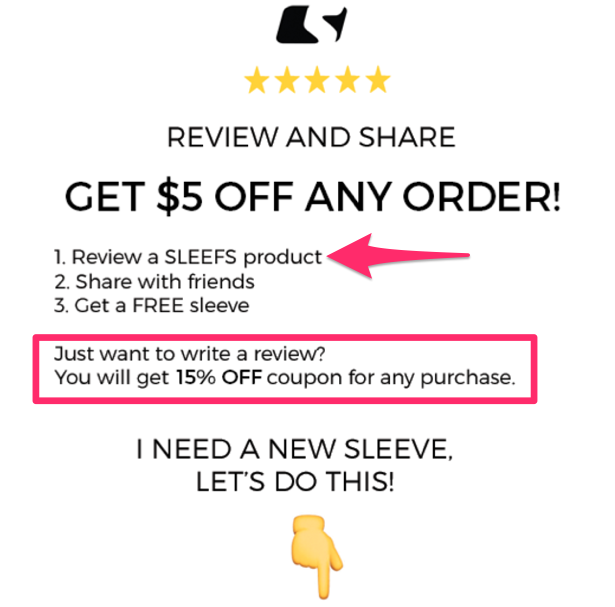
The company gives its customers an incentive to write a review.
I know some of you are thinking this might be unethical, but that’s not so.
Look at this message a bit closer. It doesn’t say anywhere you need to write a positive review. It just invites you to write a review.
Its customers also have a couple of different options here. This will appeal to people who have different preferences.
If customers are willing to write a review and share it with their friends, they’ll get a free product. The people who just want to write a review will receive 15% off their next order.
Another great part about this message is the emoji at the bottom. You can learn how to improve your click-through rates with emojis.
If people do write positive reviews after receiving your encouragement, the good reviews will balance out the negative ones.
Plus, a mix of positive and negative reviews will show people your brand is authentic. If every review was positive, it may cause prospective customers think that some of the reviews are fake.
Nobody’s perfect, and people know that. So don’t let a few bad reviews bring you down.
Ask your current customers to write more reviews, and you’ll be just fine.
Expand your presence
Where can people find out more information about your business?
You can’t just rely on one platform for ratings and reviews. Your customers have different preferences for researching brands.
OK, so your business has a Facebook page. That’s great.
But that alone isn’t enough. Take a look at which review sites consumers trust the most:
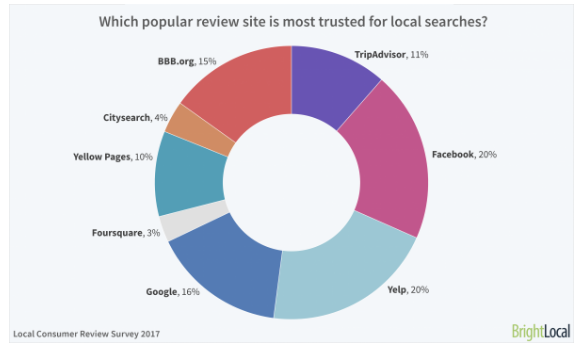
As you can see, the answers are quite different. No single platform is that far ahead of the others.
- Yelp
- Trip Advisor
- Better Business Bureau
- Yellow Pages
You need to have a profile on all of these.
Here’s something else to consider. Even if you don’t currently have an account on a platform such as Yelp, customers can still leave reviews on those sites about your business.
It’s in your best interest to claim those business pages to make sure all your information is accurate.
I’m referring to information such as your website address, phone number, physical address, and store hours. If you don’t claim your pages and check them for accuracy, it could hurt your reputation even more.
Let’s say someone sees a bad review online but they still want to give you the benefit of the doubt. They call you to find out more information and get a disconnected line because your phone number was inaccurate.
You just lost your chance of getting that person’s business. Don’t let this happen to you, and make sure your business is getting reviews on as many platforms as possible.
Remove ads from your website
You may not realize it, but your website may be hurting your credibility.
There could be certain design choices or elements that are turning people away and making them think your business is untrustworthy. You need to correct this as soon as possible.
Identify the top elements adding credibility to your website, and compare them to those on your own site.
One of the first things you should do is get rid of any ads you’re currently running for other businesses.
Look at how many different types of ads consumers dislike seeing:
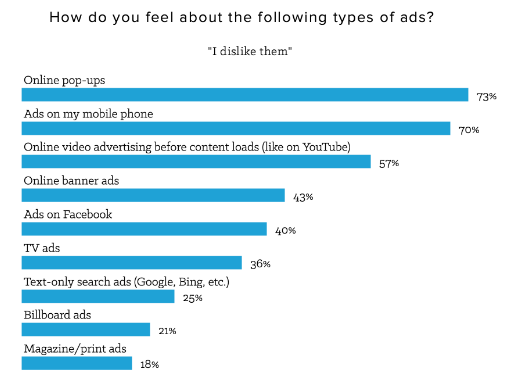
Pop-ups and banner ads both ranked high on the list.
I know some of you may be selling ad space on your site as a way to increase your revenue streams, but it’s not worth it.
How much are you generating from these ads?
Compare that to the potential you could be making from selling actual products and services on your website. It just doesn’t make sense to prioritize something like ad space.
Encourage customers to upload their photos
In addition to asking your customers to write reviews for your business online, you also want them to upload photos.
Why?
Well, 77% of consumers say customer photos have a greater impact on their buying decisions than professional photos.
This makes a lot of sense. Photos you take of your business will obviously be great and make your brand look good.
But customer photos are much more authentic.
They won’t be taken on a professional camera and be positioned in perfect lighting.
Customer photos are likely to be taken quickly on their smartphones. But those images are enough to improve your reputation, especially if they’re uploaded with a favorable review.
Here’s an example of how JCPenney encouraged its customers to upload photos with this email campaign:
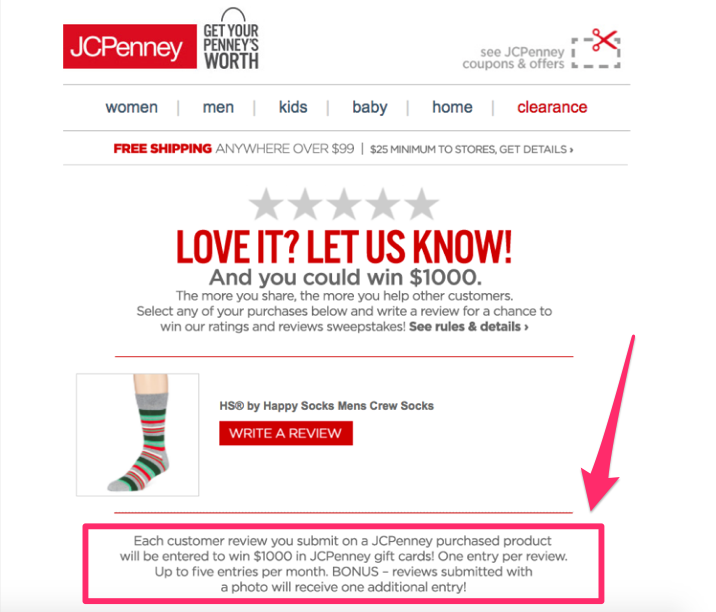
As in a previous example, this message is designed to encourage the store’s customers to write reviews. By writing a review, they’ll be entered into a contest to win a $1,000 gift card.
This is a great strategy for running a profitable giveaway.
But customers have a chance to get additional entries. If they upload a photo with their review, they’ll get a second entry to increase their chances of winning.
Use a similar tactic when trying to get your customers to write reviews. Ask them to upload photos as well.
Publicly respond to customer complaints
When users write unfavorable reviews about your business online, it can be a tricky situation.
Obviously, you want to defend yourself. But at the same time, you don’t want to start an argument with anyone.
Ignoring complaints isn’t the best option either. Other people will want to see how you’re able to handle a negative situation.
Remember the first rule of business? The customer is always right.
Even when they’re wrong, you need to treat them properly. Rather than being defensive and trying to make yourself look better, focus on making them happy.
Here’s an example of how Best Buy responded to a customer complaint on its Facebook page:
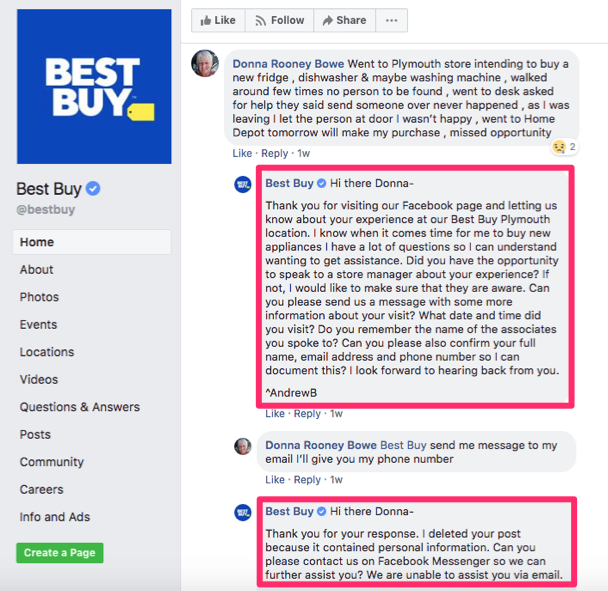
This customer had a problem with her experience at a specific store location.
Rather than trying to defend the situation, the company politely replied, empathizing with the customer and trying to get more information to help come up with a resolution.
Furthermore, this customer continued having problems when it came to reaching customer support on Facebook.
Best Buy responded to that comment as well by replying again and making sure her personal information and privacy were protected. This is a great example of how to publically handle customer complaints in the digital world.
Share user-generated content
As previously discussed, customer photos attached to a review are a great way to improve a brand’s reputation.
However, not everyone who writes a review will upload a photo.
Fortunately, that’s not the only way for you to get customer photos in the public eye. Start sharing user-generated content on your social media platforms.
Now you can control which types of customer photos make your brand look the most appealing.
Check out this example on Instagram from Vuori Clothing:
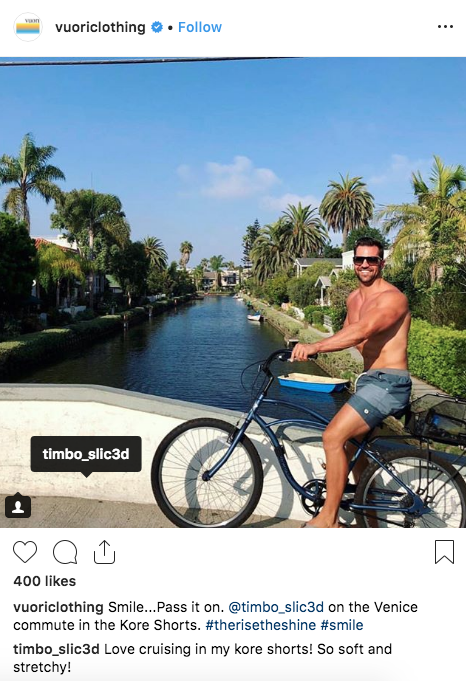
This photo shows a real person wearing the company’s product as opposed to one of its employees modeling the gear.
User-generated content creates social proof of concept and is beneficial to your reputation.
Prospective customers will be more inclined to support your business if they see social proof on your platforms.
Take advantage of tools that monitor your reputation
How is your online reputation?
Unless you had a damaging event, some of you might not even know whether you have a positive or negative reputation online.
Sure, you might monitor some of your comments and review websites, but that alone isn’t enough to get the full picture of how people really feel about you.
You need to start using online tools to notify you when someone mentions your business. For example, a third-party review website could write an unfavorable blog post about one of your products.
If you were monitoring reviews only on Yelp and Google, you wouldn’t know about this at all.
But if you use a tool such as Google Alerts, you’ll be notified every time you get mentioned.
You can even take this one step further and use Rankur that has more specific software for online reputation management:
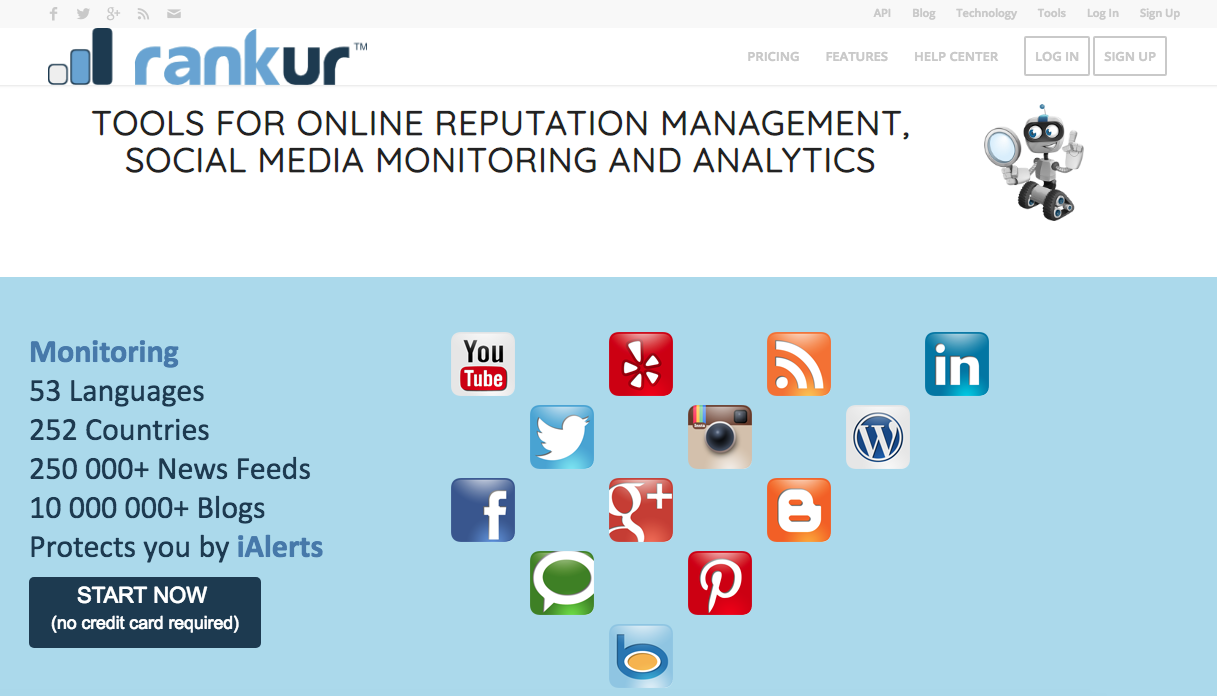
I definitely recommend trying options like these.
After all, how can you improve your online reputation if you don’t know where it stands to begin with?
Start prioritizing your blog
A great way to get a better online reputation is by improving your domain authority.
Blogging is one of my favorite ways to accomplish this.
If you’re one of my faithful readers, you know how much I believe in this strategy. You can start scaling your lead generation through blogging as well.
Publishing posts on your website on a regular basis will improve your SEO. You’ll be able to get both inbound and outbound links through this strategy.
Posting images and enhancing your content by building infographics will increase the chances that other websites will repurpose your content.
As a result, your authority ranking will also improve.
Partner with social influencers
Social influencers are another way to help you create social proof, which I discussed earlier when talking about user-generated content.
Studies show 90% of consumers trust recommendations from their peers. And 71% of consumers are more likely to buy something based on a social media referral.
That’s what makes social influencers so appealing.
Take a look at how CALIA used this strategy by partnering with Anastasia Ashley as an influencer on Instagram:
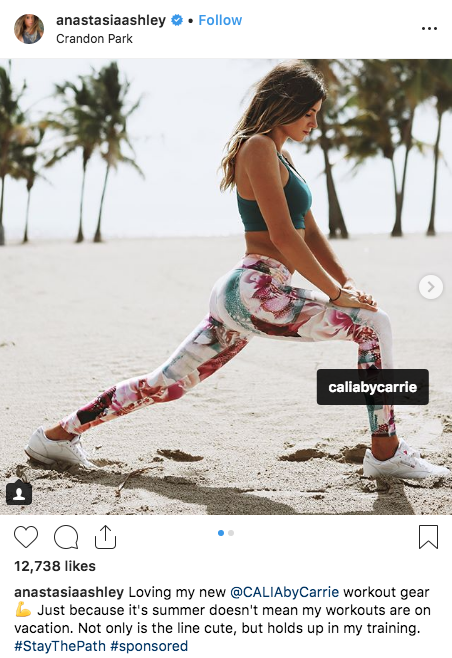
Instead of sharing this image on its own page, the company posted it on the influencer’s account.
As a result, the content got seen by a much wider audience.
Leveraging your relationships with social influencers exposes your brand to a group of people who may not even know your company exists.
Plus, if people are following that influencer, they must value their opinions. So they’re already primed for you to target them.
Showcase customer testimonials
Customer reviews on third-party sites are an important aspect of improving your reputation.
But you can showcase the top reviews in the form of a testimonial on your website. Ask your best customers to take the time to write a testimonial for you.
Here’s an example of how BuildFire uses this tactic on its homepage:
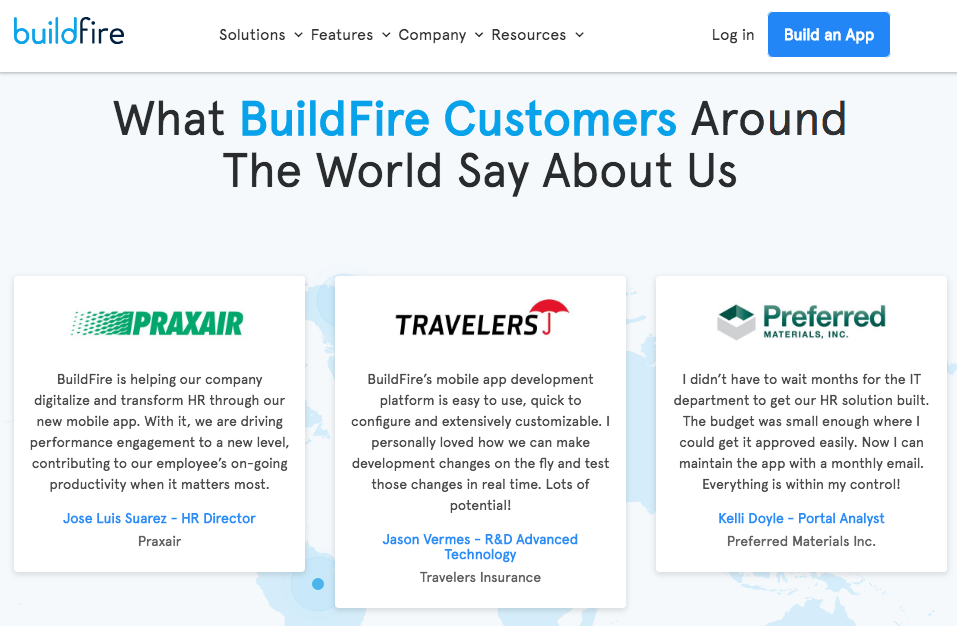
The company highlighted testimonials from three very different businesses.
Having a well-respected insurance company such as Travelers write a testimonial for its business automatically improves BuildFire’s reputation.
Try to get testimonials from authority figures in a specific industry.
For example, let’s say your business makes musical instruments. A testimonial from a guitar player in a well-known band would help your reputation more than a review from a kid who plays drums in his parent’s garage.
Conclusion
If your company’s reputation got damaged, you can still correct it.
Even if you’re just trying improve your reputation or build credibility from scratch, you should follow the advice I’ve outlined in this guide.
Encourage your customers to write reviews. Set up a profile on as many review platforms as possible.
Reviews with pictures are even more impactful.
Get rid of ads on your website. Learn how to respond to customer complaints in the public eye.
Use tools that help you manage your reputation online. This will help you stay informed anytime someone mentions your business.
Share user-generated content. Start blogging more frequently. Work with social influencers.
In addition to reviews, use your website to highlight customer testimonials.
If you follow these tips, you shouldn’t have much trouble improving or repairing your online reputation.
What steps are you taking to improve the online reputation of your business?


from Brian Milners SEO Feed http://feedproxy.google.com/~r/Quicksprout/~3/neWrZj_zlX0/
via IFTTT